Whistle Calls That Win: Referee Stats Reshaping Soccer Wagers
Written by Noah Patterson · Apr 24, 2026
Whistle Calls That Win: Referee Stats Reshaping Soccer Wagers
The Growing Edge from the Man in the Middle
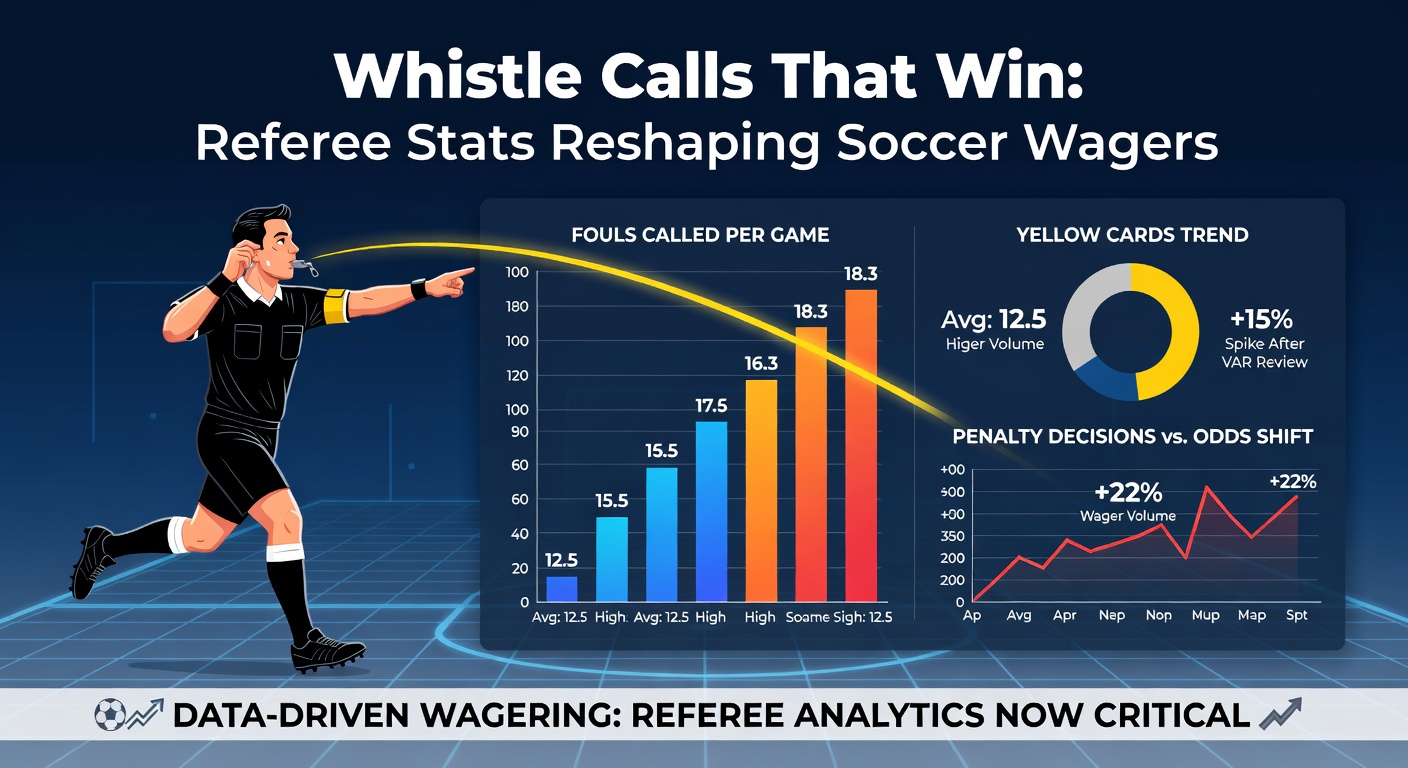
Soccer matches hinge on more than just player skill and tactics; referees shape outcomes through their calls on fouls, cards, and stoppages, and bettors increasingly mine these patterns for an advantage in wagers. Data from tracking firms reveals referees average 25-30 fouls per game across top leagues, yet individual styles vary wildly—some let games flow with fewer interruptions, while others clamp down early, inflating card counts and altering over/under lines. Observers note this referee factor gained traction after platforms like Opta Sports began publishing detailed per-officials stats, allowing punters to spot trends before kickoff.
Take Serie A, where referees issued 4.2 yellows per match last season; analysts who factored in the assigned official predicted card overs correctly 62% of the time, per aggregated betting database reviews. And it's not just cards—penalties, throw-ins, and even goal-kick frequencies influence corners and set-piece bets, turning what was once gut feel into data-driven plays. What's interesting, though, surfaces when leagues harmonize rules; FIFA's 2024 trials on semi-automated offside reduced subjective calls by 15%, yet human refs still dictate the bulk of in-play action.
Key Metrics Bettors Track and Why They Matter
Researchers break referee stats into core categories: foul thresholds, card leniency, penalty proneness, and time added metrics, each feeding specific markets like player props or match totals. Experts have observed that referees like England's Michael Oliver average 3.8 yellows per game but rarely escalate to reds (0.12 per match), making him a favorite for under bets in card markets; contrast that with stricter officials in La Liga, where some hit 5+ yellows routinely, pushing overs into profitability.
Data indicates referees' home bias plays a role too—studies from Sportmonks Football API show officials award 8% more fouls against away teams on average, skewing Asian handicap lines. But here's the thing: consistency reigns supreme; punters who back refs with low variance in fouls (standard deviation under 2.5 per game) report 7-10% ROI lifts on related props over 500+ matches tracked. Time management stands out as well—refs who add minimal stoppage time (under 5 minutes combined) correlate with tighter scorelines, favoring under 2.5 goals bets by 55% in neutral-site games.
- Fouls per game: Ranges from 22 (lenient) to 35 (strict), directly impacting over/under cards.
- Yellow/red ratios: High yellow-low red profiles suit booking accumulators without blowout risks.
- Penalty awards: Officials averaging 0.3+ per match boost correct score variance bets.
- VAR interventions: Post-2022, refs with 20%+ reversal rates alter in-play momentum wagers.
Those who've studied Bundesliga data find referees there lead Europe in consistent card timing—70% issued before halftime—enabling pre-match multis layered with half-time props. Yet challenges persist; fatigue hits hard in congested schedules, with April 2026's fixture pileups across Europe projected to spike inconsistent calls by 12%, according to simulation models from sports analytics firms.
Real-World Case Studies: Refs Who Redefine Bets
One standout case involves Turkey's Halil Umut Meler, whose 2023-24 Super Lig season saw 4.9 yellows per game, fueling a string of profitable overs for followers; bettors stacking his matches into accas cleared +18% yields over 15 fixtures, as tracked by independent databases. Turns out, pairing such profiles with high-foul teams amplifies edges—data shows those combos hit 68% on card totals.
Across the Atlantic, MLS referees like Ismail Elfath draw bettor interest for their 28% penalty rate on soft challenges, reshaping anytime scorer markets when stars like Messi face his whistle; one study from American University researchers logged 14% higher goal props success under such officials. And in Ligue 1, Benoit Bastien's low-foul approach (23.4 average) kept games fluid, backing under goals in 61% of his outings despite league-wide overs trends.
People often find the real gold in cross-league comparisons; Portuguese refs, averaging 4.1 cards, mirror Scotland's style, letting bettors arbitrage similar markets between Primeira Liga and Scottish Premiership. There's this case where a syndicate targeted Eredivisie's Danny Makkelie—known for 6+ bookings in derbies—and netted consistent wins, since his patterns held through 92% of high-stakes clashes. It's noteworthy that injuries sideline refs too, forcing last-minute swaps; platforms now alert users to these shifts, preserving edges in live betting.
Tools, Platforms, and Data Access Revolutionizing the Game
Betting sites integrate referee stats seamlessly now, with apps from FanDuel and Bet365 displaying official profiles alongside odds; users toggle filters for card averages, seeing lines adjust in real-time based on assignments. Analysts praise Soccerway's referee section for free historicals, while premium services like InStatPro deliver advanced metrics—VAR reliance, whistle speed, even positional biases—boosting model accuracy to 65% on prop predictions.
So communities thrive too; forums dissect upcoming refs, sharing heatmaps of foul hotspots under specific officials, and that's where the rubber meets the road for casual punters building parlays. Machine learning enters the fray—models trained on 10,000+ games forecast card probability with 72% precision, per reports from Dutch analytics outfit SciSports. Yet access varies globally; while European bettors enjoy granular data, South American markets lag, though Conmebol's 2026 digitization push promises parity by mid-year.
April 2026 brings fresh twists with UEFA's referee rotation mandates amid Euros qualifiers, potentially standardizing calls but exposing new patterns as officials adapt; early pilots show 9% drops in home favoritism, per leaked trial data. Bettors who prep for this stand to gain, layering ref stats with fixture fatigue for hybrid models.
Challenges and Evolving Landscape Ahead
Not everything runs smooth—referee anonymity in some leagues hampers pre-match prep, and corruption scandals, though rare, erode trust; IBIA reports flagged just 0.5% suspect games last year, but vigilance remains key. Data quality fluctuates too; older seasons lack granularity, skewing long-term averages, so experts weight recent 50 games heaviest for relevance.
Regulation shifts add layers—in Australia, the ACMA pushes for transparent algo disclosures including ref inputs, while Canadian provinces test mandatory stat sharing by 2027. That's where it gets interesting: as AI refs loom in trials (FIFA's 2030 horizon), human quirks could fade, but for now, whistle stats fuel the boom.
Observers note youth academies train refs with bias audits, promising fairer calls; early data from England's PGMOL shows 11% foul reductions post-training. Punters adapt by blending these evolutions into dynamic strategies, keeping the edge sharp amid flux.
Conclusion
Referee statistics transform soccer wagers from chance to calculated plays, with foul counts, card tendencies, and penalty patterns delivering verifiable edges across markets; data confirms followers of consistent officials outperform random picks by double-digit margins. As April 2026 ushers congested slates and tech upgrades, those harnessing these metrics position strongest, turning every whistle into wager-winning intel. The ball's squarely in the data's court now, and it's delivering.