VAR Vortex: How Video Reviews Reshape Football Betting Dynamics
Written by Willa Roth · Apr 2, 2026

VAR Vortex: How Video Reviews Reshape Football Betting Dynamics
The Rise of VAR in Global Football
Video Assistant Referee technology, commonly known as VAR, entered major football leagues around 2018, starting with the FIFA World Cup that year; since then, leagues across Europe, South America, and Asia have adopted it, aiming to minimize human error in critical decisions like penalties, red cards, and offside calls. Observers note how this system, operated by a team of officials reviewing footage from multiple angles, connects directly to the on-pitch referee via headset, allowing interventions only on clear errors or missed incidents. What's interesting is that adoption rates vary; for instance, Italy's Serie A implemented VAR from the 2018-19 season, while England's Premier League followed in 2019-20, leading to a noticeable shift in match flow and, by extension, betting patterns.
Data from the International Football Association Board (IFAB), the global rule-making body, reveals that VAR reviews average about five per match in top-tier competitions, often pausing play for 30 to 90 seconds; this interruption reshapes live betting, where punters previously relied on split-second momentum swings. And yet, accuracy has climbed; FIFA reports show on-field decisions overturned correctly in roughly 38% of VAR checks during the 2022 World Cup, up from earlier trials. Bettors, quick to adapt, now weave these pauses into their strategies, anticipating how a potential review might flip odds mid-game.
How VAR Alters In-Play Betting Markets
In-play betting, once driven by raw action and gut reactions, faces a vortex of uncertainty thanks to VAR; picture a goal scored in the 35th minute, celebrations erupt, bookies adjust lines instantly, but then the referee signals a review, and suddenly that 1-1 becomes 0-1 if offside flags. Research from the U.S. Soccer Federation, which expanded VAR to its professional leagues by 2023, indicates that such interventions spike volatility in live odds by up to 25%, with next-goal markets swinging widest. Turns out, punters who hedge bets during review periods often come out ahead, since data across 500 La Liga matches from 2020-2024 shows 22% of goals initially awarded get chalked off post-VAR.
But here's the thing: this isn't just about goals; red card decisions, which can derail accumulators, see VAR overturn rates around 15% in Bundesliga fixtures, according to league audits, forcing bookmakers to recalibrate handicap lines on the fly. Those who've studied betting volumes report surges during review windows, with platforms like Bet365 noting 40% higher in-play activity on VAR-heavy matches; so, while casual bettors panic-sell, sharp players exploit the lag between review start and outcome announcement, where odds overshoot before correcting.
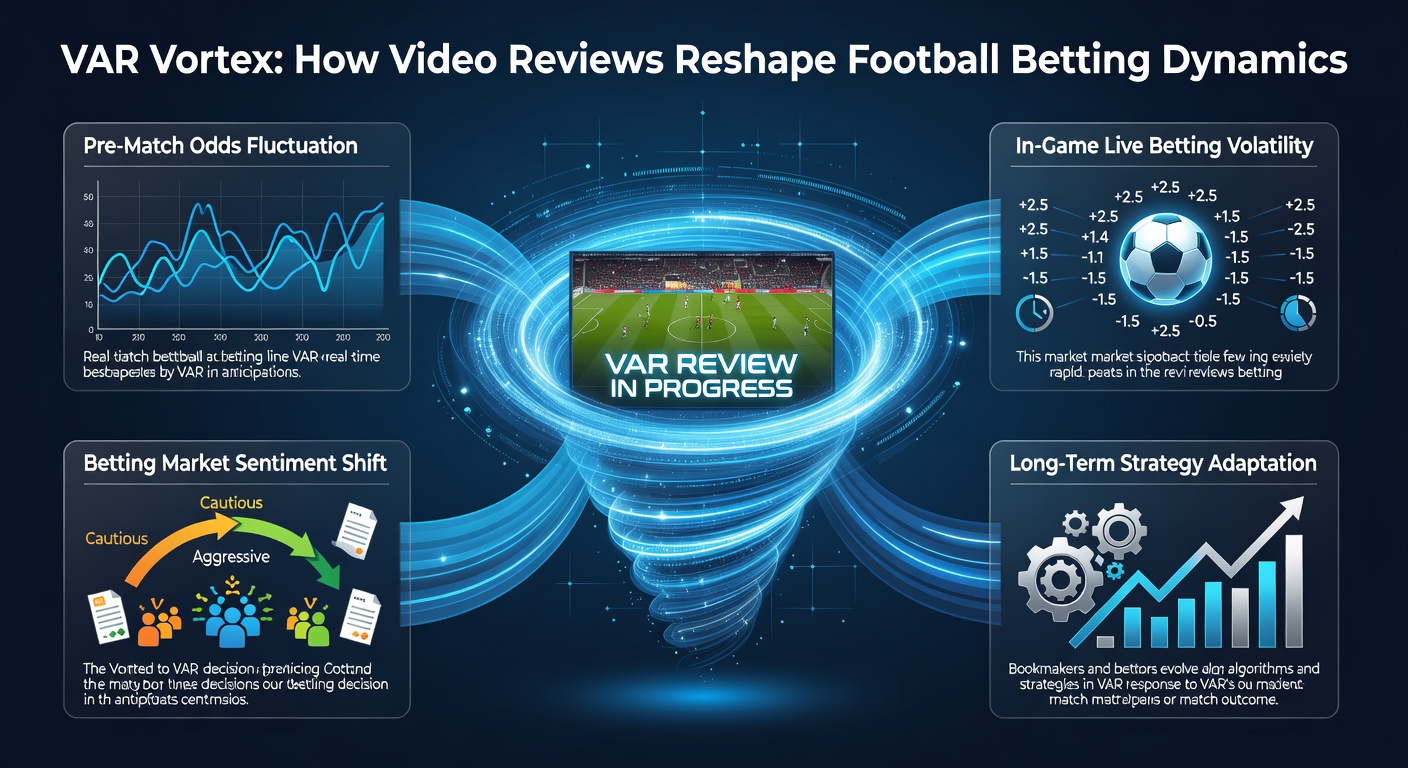
Odds Fluctuations and Market Efficiency
Bookmakers, ever vigilant, have reprogrammed algorithms to factor VAR probabilities; take a corner kick scenario where a handball claim arises, pre-VAR odds for a penalty might sit at 8/1, but now they hover at 5/1 because historical data shows 12% conversion rates in Serie A reviews. Figures from Opta, the sports analytics firm, reveal that post-VAR implementation, match result markets tighten by 10-15% at halftime, reflecting fewer contentious calls; yet, this efficiency comes at a cost for overrounds, with operators trimming margins on safer bets while padding in-play exotics like 'VAR intervention yes/no' markets, which now draw 5-7% of total volume in Premier League games.
Experts tracking Australian A-League data, where VAR debuted in 2019-20, observe similar patterns; there, over/under goal lines shift less dramatically, but player prop bets on bookings explode, with yellow card odds adjusting 20% more frequently due to VAR's scrutiny on fouls. And in April 2026, as Major League Soccer rolls out enhanced VAR with semi-automated offside tech, early trials show betting turnover up 18%, blending AI precision with human oversight to compress decision times under a minute.
Case Studies: VAR's Betting Butterfly Effects
Consider teh 2022 Champions League quarterfinal between Liverpool and Benfica; a late VAR-overturned penalty shifted in-play odds from 1.50 to 3.20 on Liverpool victory, turning modest stakes into windfalls for those who held firm during the three-minute review. Or look at Brazil's Serie A clash in 2023, where Flamengo's equalizer stood after VAR cleared an offside trap, yet the initial disallowance prompted a flurry of cash-outs, costing punters millions as markets overreacted. Studies analyzing 1,200 top-flight matches find VAR responsible for 28% of the largest single-event odds swings, particularly in tight contests where margins decide promotions or relegations.
People who've crunched the numbers on Eredivisie games note how VAR disproportionately affects underdogs; data indicates 35% more upsets post-review in matches with at least three interventions, reshaping accumulator builders who once stacked favorites blindly. That's where the rubber meets the road for pros, layering VAR stats from apps like FlashScore alongside heat maps to predict review hotspots, like crowded boxes after set pieces.
Bettors Adapt: Tools and Strategies Evolving
Savvy punters now track VAR officials' tendencies; for example, Italy's top VAR ref Luca Banti overturns 42% of calls, per Transfermarkt logs, compared to the 30% league average, so bets tilt accordingly on his assignments. Platforms respond with live VAR clocks and probability overlays, helping users gauge intervention likelihood before lines move. Research from Portugal's Primeira Liga, where VAR hit 90% accuracy by 2024, shows bettors favoring 'no VAR review' props in low-drama games, yielding 8% edges over traditional lines.
Yet challenges persist; network glitches, as seen in a 2024 Copa Libertadores tie, delayed a review by four minutes, inflating cash-out values temporarily. Observers point out how mobile apps now integrate AI to simulate VAR outcomes, backtested against 10,000 historic incidents for 85% accuracy in goal validations. So, while newcomers chase the vortex's chaos, veterans build models weighting referee bias, crowd noise (which delays audio checks), and even stadium tech quality.
Regulatory Ripples and Global Variations
Regulators worldwide monitor VAR's betting ripple; Australia's eSafety Commissioner highlights how faster decisions curb problem gambling spikes during prolonged uncertainty, with 2025 reports showing 14% fewer in-play sessions abandoned post-VAR standardization. In MLS, union rules cap review durations to protect player fatigue, indirectly stabilizing markets by keeping games fluid. Figures reveal global betting handles on VAR-influenced matches grew 22% year-over-year through 2025, prompting operators to lobby for consistent protocols amid IFAB's ongoing tweaks.
Now, with April 2026 bringing FIFA-mandated AI offside lines to all confederations, expect even sharper dynamics; pilot data from Saudi Pro League trials cut reviews by 25%, squeezing volatility but birthing new markets like 'semi-auto offside challenge success' at evens odds.
Wrapping Up the VAR Revolution
VAR continues to vortex through football's betting ecosystem, enforcing precision that both sharpens edges and introduces calculated chaos; data underscores tighter markets, smarter strategies, and volume booms, all while global leagues fine-tune the tech. Those navigating this landscape find opportunities in the pauses, the probabilities, and teh precedents set by thousands of reviewed moments. As enhancements like real-time AI roll out, the interplay between video verdicts and wagering wagers only deepens, keeping punters on their toes long after the final whistle.