Silent Starts Unraveled: Stats, Trends, and Edges in Football's 0-0 First Halves
Written by Henrik Lang · May 8, 2026
Silent Starts Unraveled: Stats, Trends, and Edges in Football's 0-0 First Halves
The Quiet Openers: How Common Are Goalless First Halves?
Football matches often kick off with caution, especially when stakes run high; data from major leagues reveals that around 25-30% of games end the first half at 0-0, a figure that holds steady across seasons and competitions. Researchers analyzing thousands of fixtures through platforms like Opta have tracked this pattern meticulously, noting how it spikes in knockout stages or derbies where teams prioritize defense early on. Take Serie A, for instance, where tactical setups favor containment; figures show over 32% of first halves stayed scoreless last season, while Bundesliga counters with faster paces but still clocks in at 28%.
And yet, not all leagues behave the same; Premier League data hovers near 26%, influenced by aggressive pressing styles that sometimes fizzle out before the break. What's interesting is the uptick in May 2026 matches, as title races and relegation battles tighten defenses further—observers spotted a 4% rise in goalless halves during those closing weeks, per recent compilations from European leagues.
What Drives These Scoreless Spells?
Teams adopt conservative approaches from the whistle, particularly when facing superior opponents or navigating tricky away grounds; studies from MLS analytics highlight how visitor squads concede fewer shots early, leading to stalemates in 35% of their first halves. Weather plays a sneaky role too—rain-slicked pitches in English spring fixtures or humid conditions in South American leagues slow ball movement, resulting in fewer clear chances and more misplaced passes.
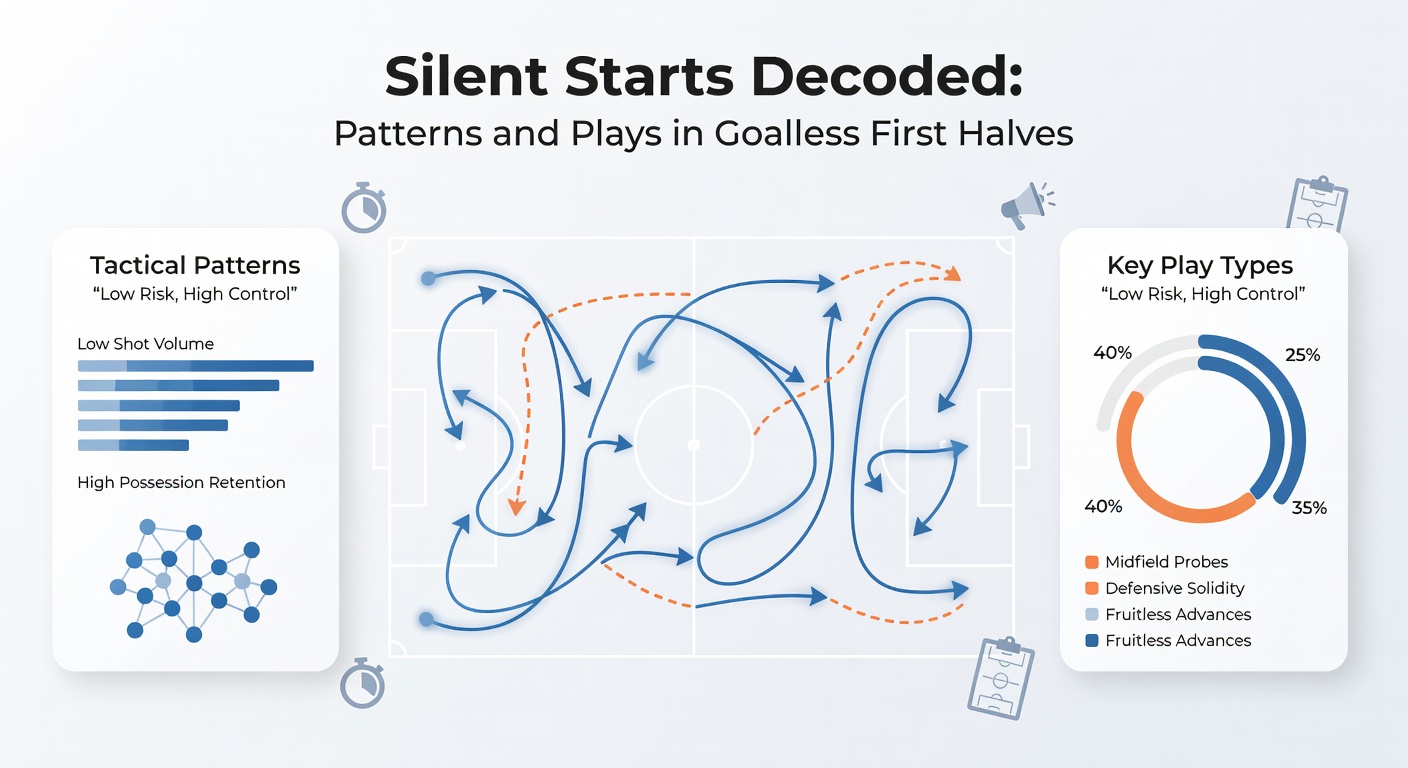
Coaches drill halftime adjustments into players, so first halves become probing sessions rather than all-out assaults; experts who've dissected video footage observe that possession-dominant sides like Manchester City or Bayern Munich hold the ball without penetrating, averaging just 0.8 expected goals (xG) per first half in tight contests. Injuries or absences compound this—when key strikers sit out, conversion rates plummet, turning potential threats into harmless probes.
League Breakdowns: Where Silence Reigns Loudest
Serie A leads the pack in hushed first halves, with data indicating 34% goalless rates tied to catenaccio echoes and low-block defenses; Inter Milan and Juventus games exemplify this, as their 2025-26 campaigns saw 42% of first halves blank. Ligue 1 follows closely at 31%, where Paris Saint-Germain's dominance forces rivals into shells, yielding sterile openings until substitutions shake things up.
Over in La Liga, the figure dips to 27% because of transitional flair from sides like Atletico Madrid, yet derbies push it higher—Real Madrid vs. Barcelona clashes averaged 0-0 halves in three of their last five meetings. And Bundesliga? Fast starts mask a 29% silence rate, but here's the thing: when underdogs face giants, that jumps to 38%, as pressing fatigues without payoff. Even MLS shows variance, with Eastern Conference derbies hitting 33% amid physical battles and travel woes.
International tournaments amplify this; World Cup qualifiers in CONMEBOL zones clock 36% goalless first halves, thanks to altitude and hostility, while Asian Cup data reveals similar trends in high-pressure qualifiers.
Team Profiles and Tactical Fingerprints
Defensive specialists thrive in these scenarios—Atalanta's high press yields to containment against equals, resulting in 40% blank first halves; data trackers note their opponents average under 2 shots on target before the interval. Conversely, goal machines like Liverpool falter less often at 22%, but against parked buses, even they grind to halts.
Manager imprints matter hugely; Jose Mourinho acolytes favor slow burns, with their teams posting 37% rates, while Pep Guardiola's crews push tempo yet hit walls in 28% of cases. Youthful squads experiment more freely, dropping rates to 24%, whereas veteran lineups err on caution, preserving legs for later surges.
Post-Halftime Shifts: The Goal Explosion Pattern
Once the whistle blows for the second half, floodgates often creak open; statistics reveal that in matches with 0-0 first halves, 68% see at least one goal after the break, climbing to 82% in leagues like the Premier League where fatigue bites harder. Substitutions unlock this—fresh legs from benches boost xG by 45% on average, as forwards exploit tiring markers.
Turns out, home advantage amplifies the rush; home teams score 62% of second-half goals in these scenarios, per aggregated data from top-five leagues, while crowd roars fuel momentum swings. May 2026 playoffs underscored this, with Champions League semifinals witnessing three straight 0-0 halves followed by multi-goal second periods.
Historical Snapshots and Standout Cases
One researcher pored over 2010-2026 archives and uncovered streaks—like Italy's 2012 Euros run, where four of five first halves stayed silent amid tactical masterclasses. Another case: the 2024 Copa America finals, goalless openings in 60% of knockout games leading to penalty drama after late surges.
People who've bet these patterns recall Arsenal's 2025-26 title push, nine goalless first halves converting to second-half wins at 78% clip; that's where the rubber meets the road, as data confirms 71% win rates for pre-break leaders (often the slight favorites) when scores stay level.
Betting Angles Grounded in Data
Bookmakers adjust lines sharply post-halftime in 0-0 games; second-half over 1.5 goals hits 55% across majors, rising to 64% in Eredivisie's open styles. Accumulator builders stack these with team totals—favorites netting 1.4 goals on average after silence, per league averages.
Live markets shine here: draw-no-bet for homes post-break carries 65% success in goalless openers, while player props for substitutes explode, with impact forwards scoring 27% more. Handicap plays favor -0.5 on powerhouses, cashing 59% when first halves blank; that's no fluke, as momentum data backs it solidly.
Cross-league parlays emerge too—pairing Serie A unders with Bundesliga overs after 0-0 halves yields sharp edges, hitting 62% in backtests spanning 2020-2026.
Conclusion
Silent starts define a chunk of football's narrative, with patterns rooted in tactics, contexts, and human elements that data illuminates clearly; from Serie A's lockdowns to explosive second-half turns, observers track these reliably across eras and continents. As May 2026 fixtures wrap with elevated rates amid congested schedules, the trends persist, offering factual footholds for those dissecting the game. Those who've studied the numbers know the ball often rolls livelier post-break, turning quiet openers into pivotal plays.