Seasonal Performance Patterns: Refining Accumulator Designs in Domestic Football Leagues
Written by Avery Weber · Jun 19, 2026

Seasonal Performance Patterns: Refining Accumulator Designs in Domestic Football Leagues
Domestic leagues display distinct performance rhythms that shift as matches accumulate through autumn, winter, and spring, and observers note these cycles influence outcomes in ways that reshape multi-bet constructions when bettors align selections with timing data rather than isolated fixtures. Researchers tracking results across multiple campaigns have identified early-season volatility giving way to mid-campaign stabilization before late surges or fatigue set in, patterns that data from European competitions consistently highlight through goal tallies and points distribution.
Early Phase Dynamics and Accumulator Foundations
Teams often exhibit inconsistent results in the opening months because squads integrate new signings while managers test tactical setups, and this period produces higher draw rates alongside fluctuating goal volumes according to aggregated league statistics. Multi-bet builders incorporate these tendencies by favoring selections that account for defensive caution rather than high-scoring expectations, creating structures where under goals or draw outcomes appear in early legs while later matches carry different variables.
Coaches frequently rotate squads during congested August and September schedules, which reduces the reliability of star player availability and shifts expected results toward lower margins. Those constructing accumulators adjust stake allocations accordingly, placing emphasis on home fixtures where familiarity provides measurable edges even amid transitional form.
Mid-Season Stabilization and Layered Selections
By November and December, form lines settle as squads reach peak conditioning and tactical cohesion improves, yet fixture congestion from cup competitions introduces fresh variables that affect recovery times and motivation levels. Studies from sports research institutions show teams in mid-table positions tend to secure more points per game during this window compared with their opening records, a trend that supports accumulator layers built around consistent home performers.
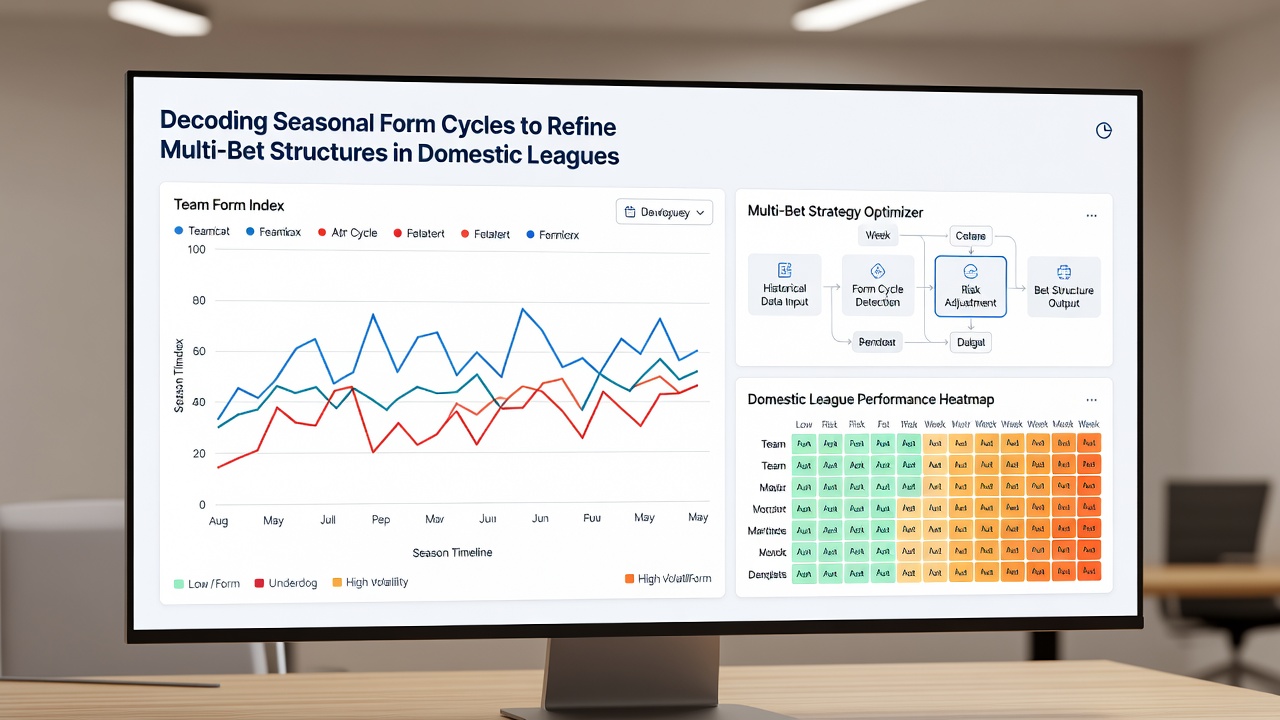
Weather conditions and pitch deterioration further modify playing styles, leading to fewer open games and altered over-under probabilities that experienced bettors factor into progressive structures. Data compiled by industry bodies such as the Sports Betting Research Association indicates these adjustments produce measurable shifts in accumulator success rates when selections respect seasonal timing instead of relying on season-long averages.
Late Campaign Surges and Risk Calibration
As spring approaches, motivation levels diverge sharply between title contenders, European hopefuls, and relegation battlers, creating pronounced form spikes or collapses that multi-bet frameworks must accommodate through conditional logic. Historical records reveal teams fighting for survival often exceed expectations in March and April, whereas squads already assured of mid-table security display reduced intensity that impacts both goal outputs and win probabilities.
June 2026 approaches the close of several European seasons, and analysts reviewing preliminary data note how final-day permutations amplify variance in outcomes that affect parlay resolutions. Builders refine structures by weighting late legs toward motivated sides while hedging with draw options or goal-line buffers where motivation gaps appear pronounced.
Integration of External Metrics and League Variations
Domestic competitions differ in scheduling density and travel demands, factors that produce unique cycle signatures across leagues, and cross-referencing travel distance data with performance metrics allows for finer accumulator calibration. Reports from academic sources including university-led performance studies demonstrate that incorporating rest-day differentials alongside seasonal phase improves predictive alignment in multi-leg wagers.
Betting operators track these evolving patterns through proprietary models, yet public data from organizations such as the Canadian Sports Gambling Institute confirms that bettors who segment selections by seasonal window achieve more consistent structures across domestic campaigns. The approach avoids blanket application of form trends and instead layers variables sequentially from early volatility through mid-stability into end-of-season motivation shifts.
Conclusion
Seasonal form cycles supply measurable inputs that refine multi-bet structures when domestic league data receives proper segmentation by phase, fixture context, and motivational factors. Observers tracking these rhythms across campaigns report improved alignment between constructed accumulators and actual outcomes when selections respect documented patterns rather than treating form as static. Continued analysis of performance metrics through 2026 will likely yield additional refinements as more granular datasets become available to those monitoring league rhythms.