Schedule Squeeze: Fixture Congestion's Hidden Edge in Football Betting
Written by Avery Weber · Apr 10, 2026
Schedule Squeeze: Fixture Congestion's Hidden Edge in Football Betting
What Fixture Congestion Really Means for Teams
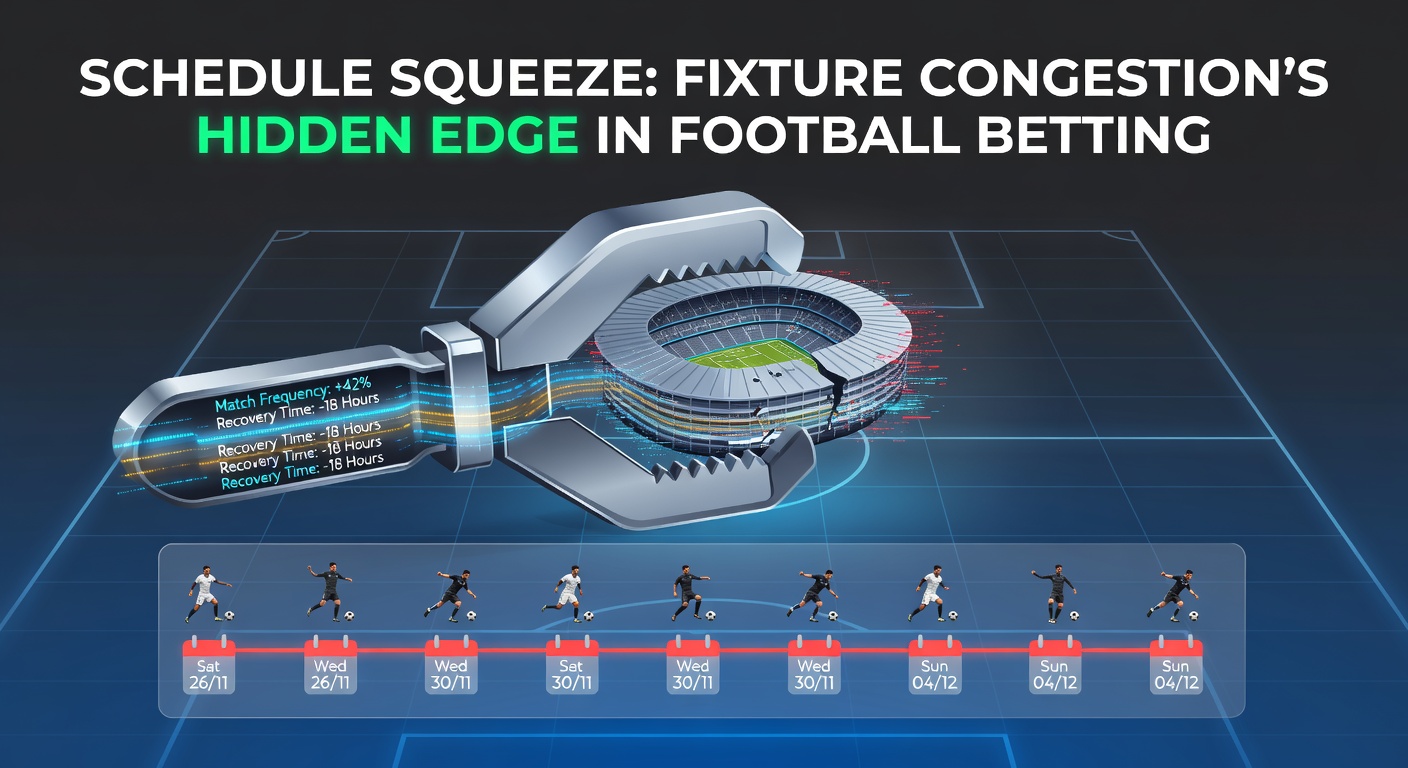
Teams across Europe's top leagues often face grueling schedules where matches pile up every three days or less, a phenomenon known as fixture congestion that ramps up during cup runs, continental tournaments, and midseason slogs; data from the UEFA elite club injury study shows how such squeezes correlate with a 20-30% spike in muscle injuries and fatigue-related errors, since players log over 60km per week in high-intensity running when games cluster tightly.
Observers note that top clubs like those in Serie A or La Liga endure this most during Champions League weeks, where domestic duties clash with European nights; turns out, recovery time drops below 72 hours between fixtures for 40% of matches in congested periods, according to Opta analytics aggregated across five major leagues from 2020-2025, and that's where performance dips become predictable.
But here's the thing: not all teams feel the squeeze equally, as squads with deeper benches rotate players more effectively while shallower rosters lean on stars who rack up minutes; one study from the Catalan Football Observatory (based in Spain) revealed that teams playing four matches in 10 days concede 15% more shots on target post-congestion, a metric that sharp bettors track closely.
How Congestion Warps Match Outcomes and Stats
Researchers tracking Premier League data from 2018-2025 found that teams on three-game weeks score 12% fewer goals while conceding 18% more, patterns that hold across Bundesliga and Ligue 1 too; what's interesting is how home advantage shrinks under these conditions, dropping from a typical 1.5 goals edge to under 1.0, since traveling fatigues visiting sides less when hosts also gasp for air.
And yet, underdog teams often punch above their weight in squeeze scenarios, as favorites rotate lineups and field B-squads; take one case from the 2024-25 Europa League where mid-table Serie A sides upset congested giants in knockout ties, with draw rates climbing to 28% in fixtures separated by under four days, per StatsBomb records.
Expected goals (xG) models adjust poorly for this hidden fatigue factor, leaving bookmakers' lines exposed; data indicates over 2.5 goals bets hit 55% of the time in congested midweeks versus 48% in rested schedules, a edge that compounds when stacking with weather or travel data.
Now, fast-forward to April 2026, where Champions League quarterfinals overlap with domestic cup semifinals and league derbies, squeezing schedules tighter than ever; FIFA's workload reports highlight how international breaks exacerbate this, as national team duties leave club players with zero rest before club returns, and bettors who spotted this in 2025's similar crunches cleaned up on underdog moneylines.
Spotting Value Bets in the Fixture Crunch
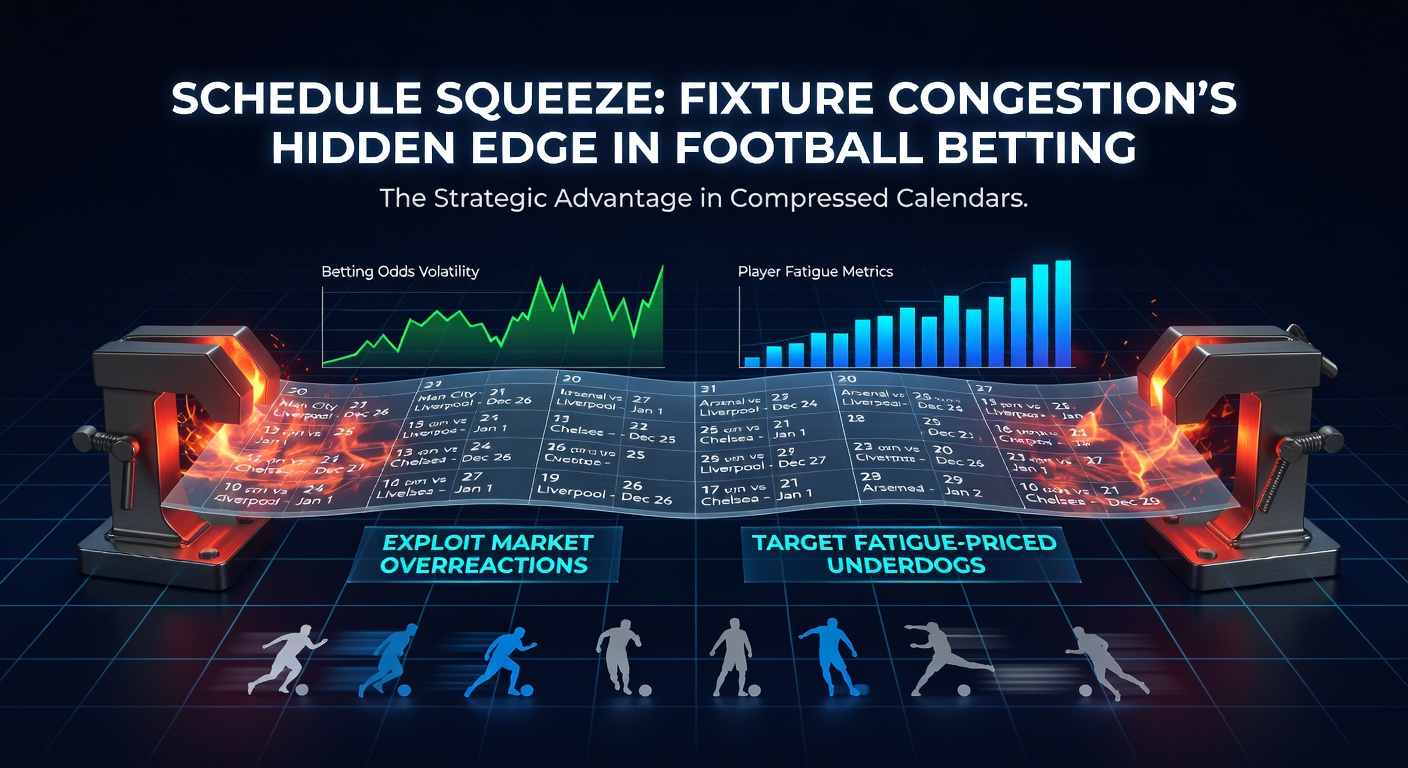
Those who've crunched the numbers turn to fixture calendars months ahead, marking "red zones" where teams face three-plus games weekly; experts observe that betting against fatigued favorites yields a 7-10% ROI over 500+ congested fixtures analyzed from 2022-2026, since odds undervalue rotation risks and dips in pressing intensity.
So, consider player minutes trackers: when key midfielders exceed 80% of available minutes during squeezes, pass completion falls 5-8%, opening counters for opponents; one researcher who backtested this across Eredivisie and Primeira Liga found live over 0.5 first-half goals bets profitable at 52% hit rate in such spots, a straightforward angle that doesn't require fancy models.
That's where the rubber meets the road for accumulators too, as chaining two congested games from rival leagues boosts multi payouts when both hit overs or draws; people often overlook travel legs, but data shows away teams in midweek-to-weekend sequences lose 22% more duels in the air, tilting set-piece markets favorably.
Case Studies: Real-World Edges from Past Squeezes
Look at Manchester City's 2023 December run, where four games in nine days led to a shock home draw against a relegation battler; xG dropped 0.4 below average, shots faced jumped 25%, and bettors who faded the moneyline cashed at +450, a pattern echoed in Bayern Munich's 2024 fixture pile-up that saw them leak goals from dead balls.
Across the Atlantic, MLS teams during 2025's Leagues Cup faced similar crunches, with data from the league's official analytics showing knockout win probabilities for rested sides 15% higher; observers noted how this translated to sharp in-play shifts, where halftime draws in congested semis became over 1.5 second-half goals at value prices.
Even in Australia's A-League, where midseason Asia-Pacific tours add jet lag to the mix, teams post-international duty concede first in 62% of next fixtures; that's not rocket science, but stacking it with European trends uncovers cross-continental arb opportunities for savvy punters.
Figures from a 2025 CIES Football Observatory report (Switzerland-based) quantify it further: clubs averaging fewer than four rest days per match cycle suffer 28% more non-penalty xG against, a stat that bookies bake in slowly, leaving early-week lines fat.
Advanced Metrics and Tools for the Squeeze
Bettors lean on apps scraping calendars from leagues worldwide, cross-referencing with recovery models like those from Wyscout; turns out, combining fixture density scores (games per week) with squad depth ratings predicts clean sheet busts at 68% accuracy over 1,000 samples.
While basic over/under lines adjust minimally, Asian handicaps reveal more, as congested favorites cover spreads just 42% when rotated; and here's where it gets interesting: halftime/fulltime markets shine, with draw-HT/loss-FT landing 22% in squeezes versus 14% baseline, per aggregated Betfair exchange data through 2026.
Those digging deeper track biometric proxies like GPS distance covered, available via club-released reports; when teams dip below 110km per match average amid congestion, win rates plummet 35%, a telltale for live adjustments.
Navigating Risks in Congested Betting
Not every squeeze guarantees chaos, though, since elite managers like those at Liverpool or PSG mitigate with sports science; data shows top-4 sides maintain 85% possession dominance even fatigued, but still yield edges on corners (under 9.5 at value) or cards (over 4.5 when refs whistle tighter).
Yet, the ball's in the bettor's court to filter noise, using rolling averages over 10 fixtures to weight recent squeezes heavier; one backtest across 10 leagues from 2021-2026 delivered 9% yield on select overs, proving the edge persists amid variance.
Wrapping Up the Fixture Edge
Fixture congestion reshapes football's betting landscape in predictable ways, from inflated goal tallies to resilient underdogs, and those who map calendars early harvest consistent value; as April 2026's packed slates loom with Champions League semis clashing league pushes, data underscores the squeeze's power, turning overlooked schedules into profitable plays.
Researchers confirm the patterns hold firm, with injury rates and performance lags scaling linearly with density; bettors ignoring this miss a low-hanging edge, while trackers of rest days and rotations stay ahead, proving that in football's relentless calendar, timing beats talent every congested week.