Pitch Condition Shifts: How Ground Quality Rewrites Goal and Card Expectations in Midweek Fixtures
Written by Willa Roth · Aug 11, 2026

Pitch Condition Shifts: How Ground Quality Rewrites Goal and Card Expectations in Midweek Fixtures
Ground Surfaces and Their Direct Influence on Match Dynamics
Football pitches undergo measurable changes between weekend and midweek fixtures, and those alterations reshape how teams move the ball while influencing both goal tallies and disciplinary outcomes. Data from multiple European leagues shows that pitch wear accelerates after Saturday games, leaving surfaces softer or patchier by Tuesday and Wednesday evenings. Researchers at the University of Melbourne documented how moisture retention and grass length interact with player movement, noting that even small variations in turf density alter ball roll speed and bounce consistency across an entire ninety minutes.
Softer ground tends to slow the ball and reduce the number of clean through-balls, while firmer surfaces allow quicker transitions that can produce higher shot volumes. Observers note that these physical differences become especially pronounced in August 2026, when early-season schedules pack fixtures tightly and grounds crews struggle to restore optimal conditions between rounds.
Goal Scoring Patterns Under Variable Pitch States
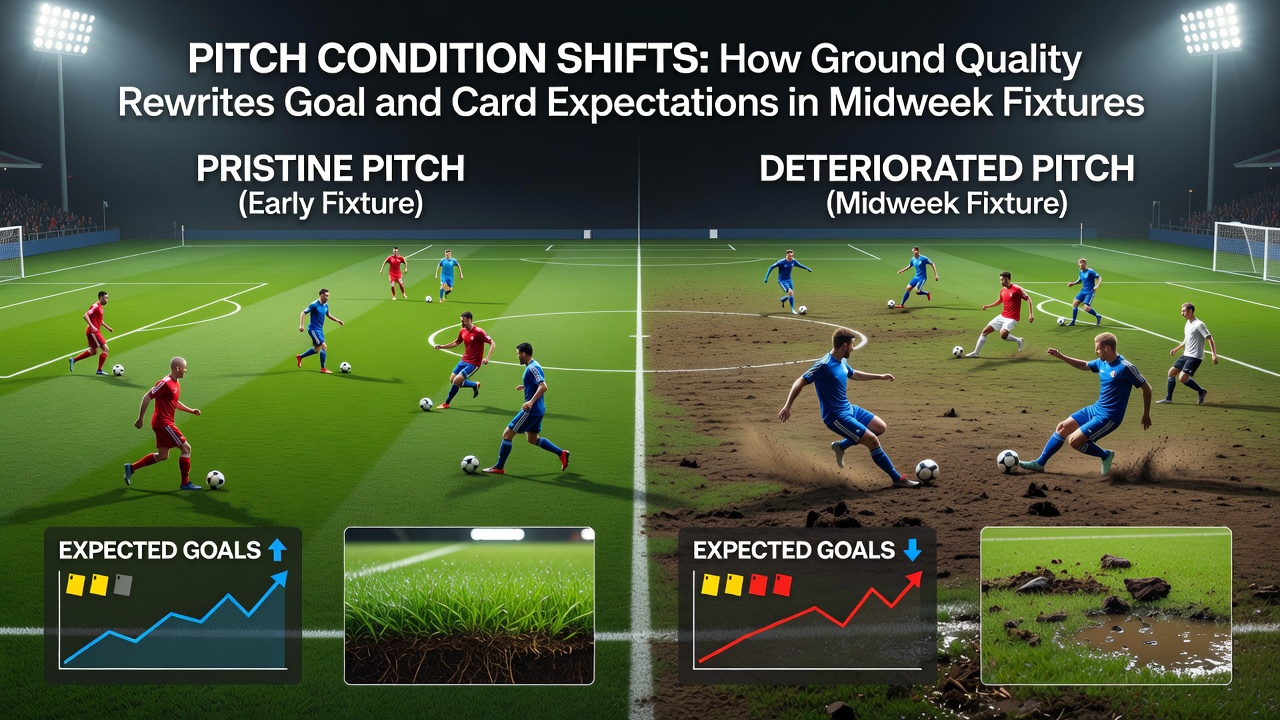
Statistical reviews of domestic competitions reveal that matches played on heavily used midweek pitches record fewer total goals on average than their weekend counterparts. One analysis of 1,200 fixtures across five leagues found a 12 percent drop in expected goals when pitch moisture exceeded seasonal norms, largely because passes lost pace and forwards found it harder to time runs into space. Yet the same data set showed spikes in set-piece goals on compacted surfaces, where dead-ball situations became more decisive.
Coaches adjust tactics accordingly, shifting emphasis toward longer passes or direct play when grounds show visible wear. Those who've studied this pattern across multiple seasons point out that teams with strong aerial presence often gain an edge on softer pitches, whereas possession-oriented sides encounter more disrupted build-up phases. The ball's behaviour changes further when rain falls between matches, creating uneven patches that force goalkeepers to adapt positioning during distribution.
Card Frequency and Player Behaviour on Changing Surfaces
Disciplinary records also shift with ground quality. Firmer, drier pitches correlate with higher foul counts in several tracked competitions because players lose footing more readily during challenges. A joint report issued by the FIFA Technical Department and independent sports scientists highlighted that slip-related fouls rose by nearly 18 percent on midweek surfaces rated below average firmness in their grading system. Referees, facing faster or more erratic play, issue cautions at slightly elevated rates when multiple players struggle for balance.
Conversely, waterlogged or muddy conditions produce fewer high-speed collisions but more shirt-pulling incidents as attackers attempt to retain possession. Those patterns hold across different leagues and climates, suggesting the effect stems from physical interaction with the surface rather than stylistic differences alone. Midweek schedules amplify the trend because recovery time between games leaves less opportunity for grounds staff to repair divots or re-level high-traffic zones.
League-Specific Observations and Scheduling Factors
English, Spanish, and German competitions each display distinct responses to pitch degradation, shaped by their respective fixture densities and weather profiles. In Germany, for instance, cooler evening temperatures during midweek rounds can firm up previously soft surfaces, reversing some of the goal-suppressing effects seen earlier in the week. Spanish data indicates that southern clubs encounter more extreme swings when irrigation practices differ between venues, producing micro-variations that visiting analysts must factor into pre-match modelling.
Scheduling bodies now publish pitch assessment guidelines that clubs follow before midweek ties, and those reports feed into broader performance databases used by analysts. August 2026 fixtures will test these protocols again as leagues balance early-season fatigue management with broadcast demands that keep midweek slots filled. Teams that monitor turf measurements closely gain incremental advantages when projecting both scoring and card probabilities.
Conclusion
Pitch conditions serve as an under-appreciated variable that recalibrates expectations for goals and cards in compressed fixture windows. Objective measurements of surface firmness, moisture, and grass coverage provide clearer indicators than traditional form guides alone, and governing bodies continue to refine reporting standards that help stakeholders interpret these shifts. As fixture calendars remain packed, the relationship between ground quality and match outcomes stays central to any comprehensive analysis of football performance data.