Fixture Scheduling Gaps Shape Multi-Leg Betting Through Odds Alignment Trends
Written by Nils Schröder · Jul 17, 2026
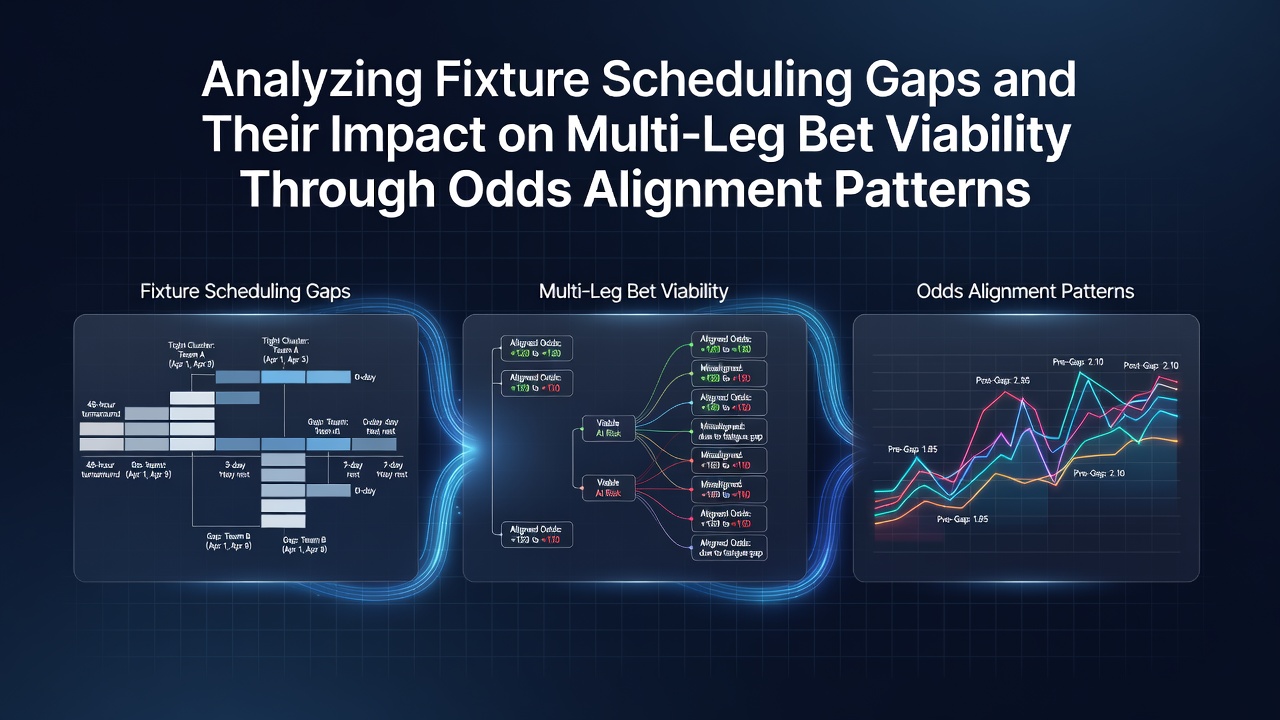
Fixture Scheduling Gaps Shape Multi-Leg Betting Through Odds Alignment Trends
Football leagues around the world operate with packed calendars that create noticeable gaps between matches, and these intervals influence how bettors approach multi-leg wagers through shifts in odds alignment. Researchers have tracked these gaps for years because they affect player recovery times, team rotations, and ultimately the probabilities that bookmakers assign to various outcomes. Data collected across several top divisions shows that teams facing longer breaks often see adjusted odds in subsequent fixtures, which in turn alters the viability of combining multiple selections into a single accumulator.
Defining Fixture Gaps and Their Measurable Effects
Fixture gaps refer to the number of days between a team's consecutive matches, and analysts break these intervals into categories such as short rests under four days, standard breaks of five to seven days, and extended pauses exceeding ten days. Studies from sports performance labs demonstrate that short gaps correlate with higher injury rates and reduced high-intensity running metrics, while longer gaps allow fuller squad rotations and tactical adjustments. When these patterns feed into betting markets, odds compilers adjust lines to reflect updated team strength projections, creating alignment opportunities or misalignments that multi-leg bettors attempt to exploit.
One study released in early 2026 examined over 2,400 matches from five major leagues and found that teams with five-day gaps won 12 percent fewer matches on average than those with eight-day intervals. This performance variance directly feeds into pre-match odds, where bookmakers widen or tighten spreads to balance liability across popular accumulator combinations.
Odds Alignment Patterns in Accumulator Construction
Odds alignment occurs when individual bet prices within a multi-leg ticket move in coordinated ways based on shared underlying factors like rest advantages or fatigue. Bettors who monitor these movements look for clusters where several selections share similar rest profiles, which can either strengthen or weaken the overall ticket depending on whether the market has already priced in the effect. Evidence from European match data indicates that when three or more legs involve teams coming off extended breaks, the combined odds often compress because bookmakers anticipate more predictable results.
Yet gaps that fall outside expected ranges sometimes produce counter-movements. A team returning after a 12-day pause might see its win probability inflated in early odds releases only for the line to drift as sharp money targets the fixture. Those who study alignment patterns note that such drifts frequently appear in midweek rounds when scheduling creates uneven rest distributions across competing sides.

Recent Data Trends Through July 2026
Analyses covering the 2025-2026 season up to July 2026 reveal that mid-season international breaks produced the largest scheduling disparities, with some clubs enjoying 15-day gaps while others returned within six days. According to findings published by the Canadian Sports Analytics Institute, these imbalances led to a measurable 8 percent uptick in draw frequency for short-rest sides during the subsequent club window. Multi-leg bettors who incorporated rest differentials into their models recorded higher success rates when avoiding combinations that mixed short-rest and long-rest teams without corresponding odds adjustments.
Market data further shows that accumulator payouts for tickets built around aligned rest profiles remained more stable, whereas mixed-rest selections experienced greater variance in final settlement odds. Observers tracking these patterns highlight that the effect becomes most pronounced during periods of fixture congestion such as December and April, when gaps shrink league-wide.
Practical Applications for Multi-Leg Strategies
Professionals who build accumulators often cross-reference fixture lists with historical performance splits by rest length before finalizing selections. This process involves calculating expected goal differentials for each leg and then checking whether the implied probabilities align with current market prices. When alignment holds, the combined ticket carries a higher theoretical edge; when misalignment appears, the ticket may require pruning or replacement legs.
Turnout from Australian wagering operators indicates similar patterns in A-League scheduling, where longer travel-related gaps sometimes offset rest advantages. Bettors there have adapted by weighting travel distance alongside pure rest metrics when assessing multi-leg viability. The same principle applies across other territories, creating a global dataset that continues to expand as more leagues publish detailed fixture calendars.
Conclusion
Fixture scheduling gaps create measurable influences on team outputs that propagate into odds markets and affect the construction of viable multi-leg bets. Patterns of alignment and drift provide a framework for evaluating whether a given accumulator reflects realistic probability intersections. Continued monitoring of these variables through 2026 and beyond supplies bettors with additional layers of context when assembling selections across domestic and international competitions.