Fixture Congestion's Bearing on the Precision of Predictive Analytics for Multi-Layered Betting Systems
Written by Nils Schröder · Aug 2, 2026
Fixture Congestion's Bearing on the Precision of Predictive Analytics for Multi-Layered Betting Systems
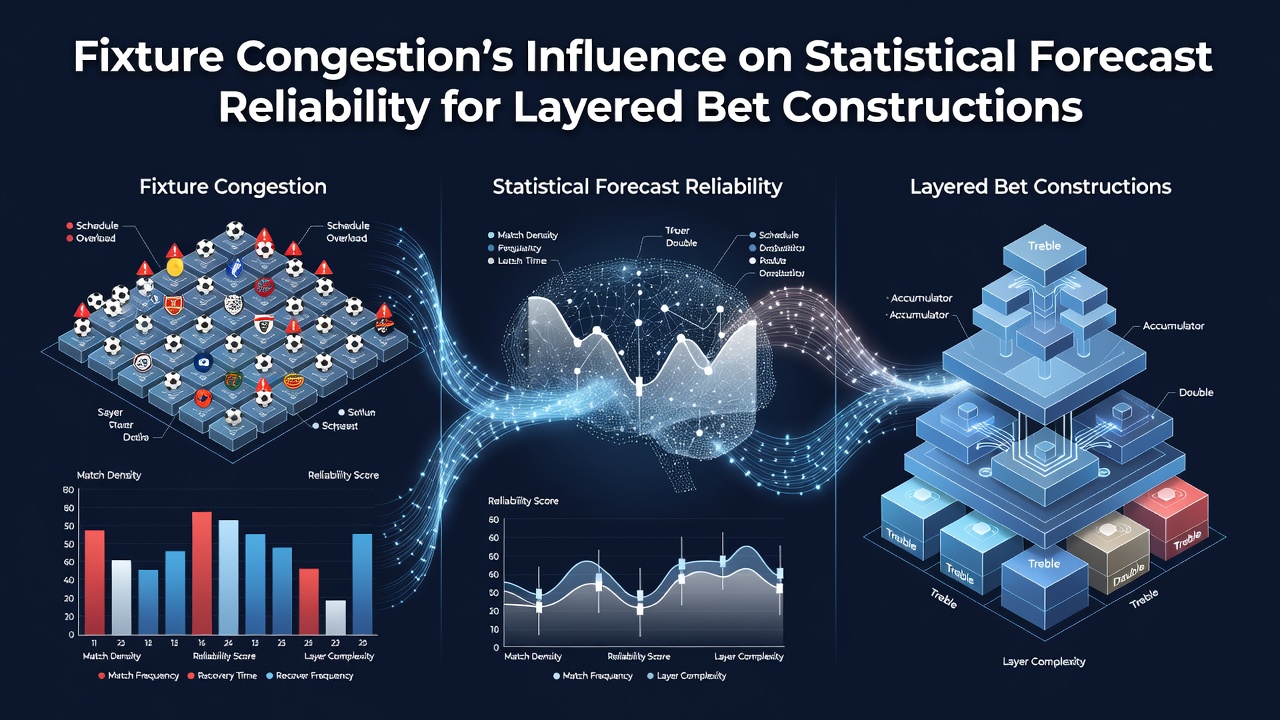
Fixture congestion arises when clubs face multiple matches across short timeframes, often due to domestic leagues, cup ties, and continental competitions running simultaneously, and this pattern alters the reliability of historical data that underpins statistical forecasts for layered bet constructions. Researchers have documented how limited recovery periods shift player workloads, injury rates, and tactical outputs, which in turn reduces the stability of models that project outcomes across accumulators and other stacked wagers. Data from the 2025-2026 season shows clusters of fixtures in August 2026, when several European leagues resumed while international qualifiers continued, creating windows where standard performance averages no longer aligned with observed results.
Schedule Density and Performance Variables
Clubs in top divisions typically encounter blocks of three matches inside eight days during peak periods, and analysts track corresponding rises in muscle injuries alongside drops in high-intensity running metrics. Studies published by the European Club Association indicate that teams playing every three days record an average 12 percent decline in sprint distance compared with standard weekly schedules, while pass completion rates in the final third fall by similar margins. These measurable shifts disrupt regression models that rely on season-long averages, because the underlying distributions change when recovery time shrinks. Observers note that layered bet constructions, which combine outcomes such as over 2.5 goals, both teams to score, and player-specific props, become more sensitive to these distortions since each layer draws from separate statistical inputs that degrade at different rates.
Forecast Model Degradation Patterns
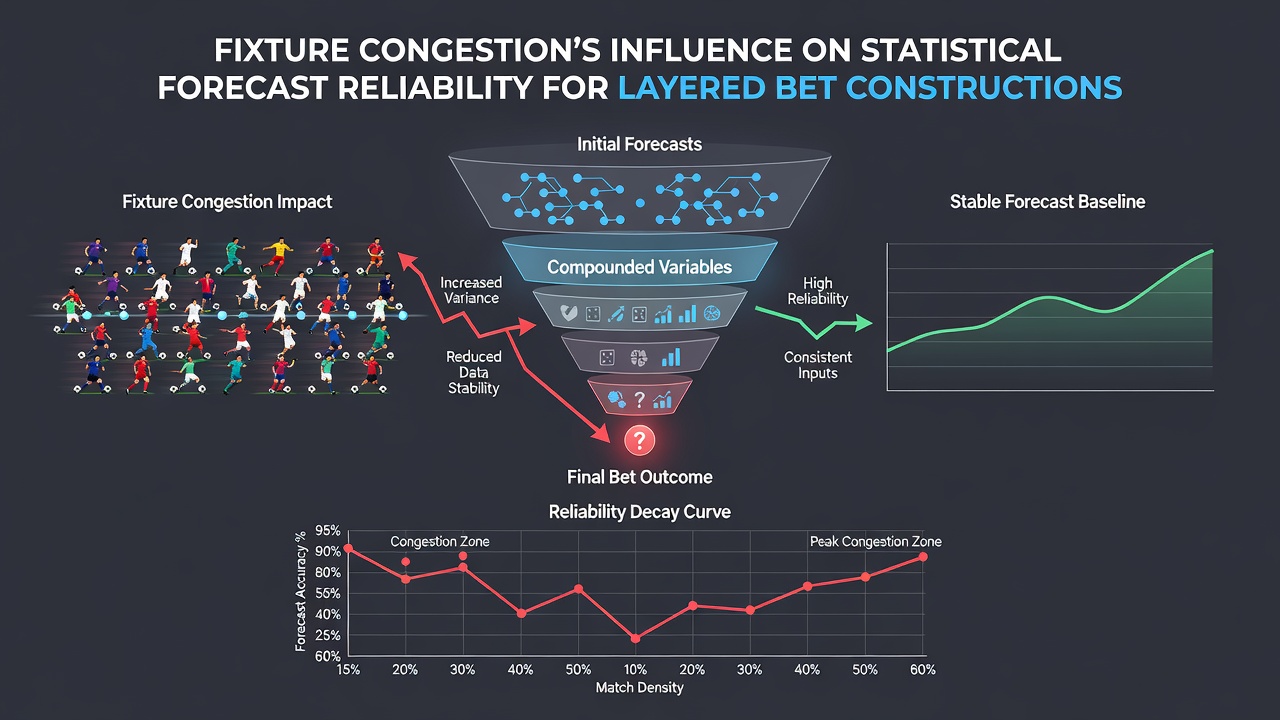
Predictive systems built on rolling averages or Poisson distributions assume stationarity in team and player data, yet fixture congestion introduces non-stationary periods that widen confidence intervals around projected probabilities. One study released by the Journal of Sports Sciences examined 1,200 matches across five leagues and found that forecast error for total goals increased by 18 percent when teams had less than four days between fixtures. The same research revealed that models trained on non-congested periods systematically overestimated scoring rates for sides entering short-turnaround blocks, because fatigue suppressed chance creation while defensive errors rose. Layered constructions compound this issue, since an accumulator that requires three or more correct outcomes multiplies small probability errors into larger deviations from expected returns.
Regional Variations in Congestion Impact
Leagues with winter breaks experience different congestion profiles than those with continuous calendars, and data from the Australian A-League demonstrates that their shorter season produces fewer but more intense fixture clusters around Christmas and New Year. In contrast, South American competitions often schedule midweek cup matches that overlap with continental tournaments, leading to squad rotation patterns that further complicate possession and shot metrics used in forecast models. Figures released by the Confederation of African Football highlight how travel demands during congested windows add another variable, with away sides showing elevated error rates in expected goals calculations when rest intervals fall below 72 hours. These geographic differences mean that global betting platforms applying uniform statistical layers encounter uneven reliability across markets.
Adjustments in Layered Construction Techniques
Bet constructors have responded by incorporating rest-day variables and recent workload indices into their frameworks, yet the added parameters increase model complexity without fully restoring baseline accuracy. Industry reports from the North American Soccer League note that teams employing heavy rotation during congestion maintain closer-to-average shot conversion rates, which partially offsets the degradation seen in less rotated sides. Those constructing multi-layer bets therefore examine squad depth metrics alongside fixture density when assigning weights to each leg. External data sources such as FIFA technical reports provide standardized workload tracking that analysts integrate into updated projections, though the reports themselves acknowledge that real-time adjustments remain limited by reporting lags.
What's interesting is how certain statistical categories resist congestion effects more than others, with set-piece conversion holding steadier than open-play metrics across multiple studies. This differential stability allows constructors to prioritize layers built around dead-ball situations when schedule density rises. At the same time, player prop markets tied to distance covered or tackles attempted show pronounced variance spikes, prompting wider odds ranges from bookmakers during congested months. Research conducted at the University of Michigan's sports analytics center found that incorporating GPS-derived workload data reduced forecast variance by roughly 9 percent in congested scenarios, though access to such granular inputs remains restricted for most independent analysts.
Conclusion
Fixture congestion therefore exerts measurable pressure on the inputs that layered bet constructions depend upon, widening error margins in statistical forecasts and altering the risk profile of accumulators that span multiple performance categories. Data from August 2026 onward continues to illustrate these dynamics as leagues balance expanded calendars with player welfare considerations. Those who build and evaluate such systems rely on evolving datasets that capture rest intervals, rotation patterns, and regional scheduling quirks to refine projections, yet complete restoration of pre-congestion reliability remains elusive given the inherent variability introduced by packed schedules.