Blending Archival Performance Metrics with Fluctuating Live Odds in Multi-Outcome Layering Approaches
Written by Avery Weber · Jun 9, 2026
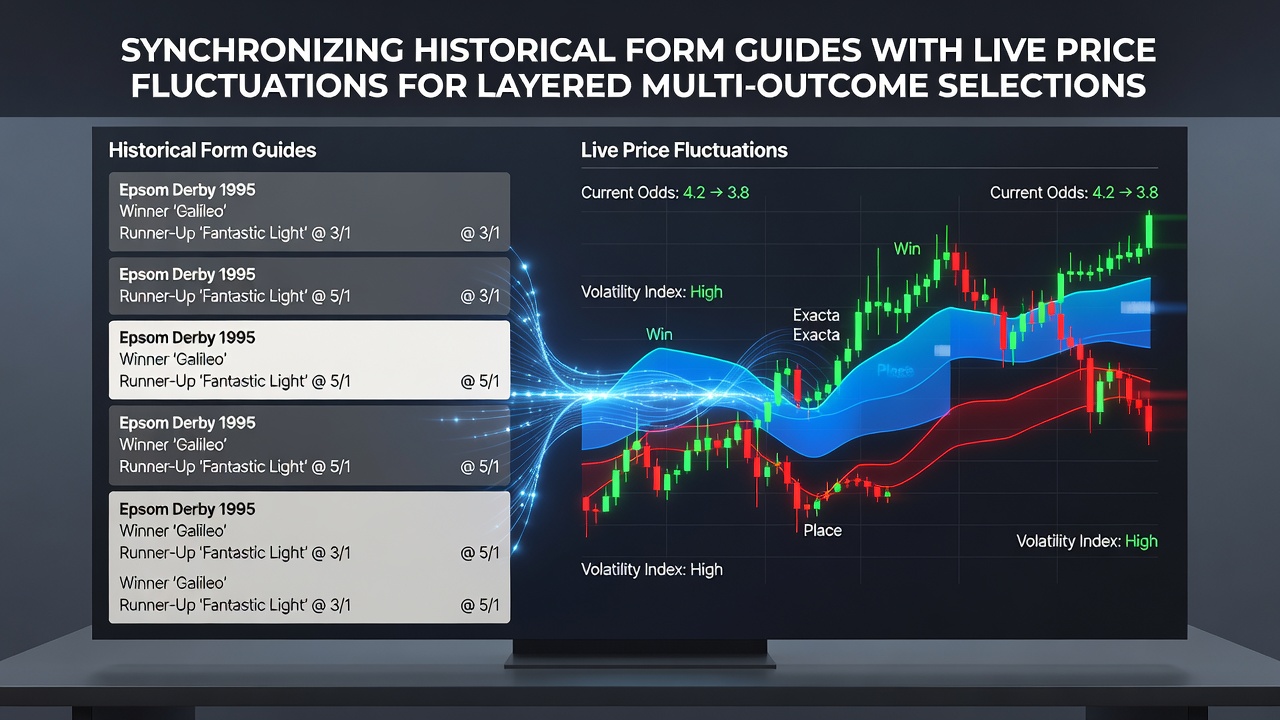
Blending Archival Performance Metrics with Fluctuating Live Odds in Multi-Outcome Layering Approaches
Analysts in wagering markets combine archival performance records with instantaneous quotation shifts to construct layered selections that span several possible results within a single wager structure, and this integration relies on data streams that update continuously while drawing from extensive historical databases maintained by statistical providers. Observers note that form guides compile metrics such as win rates, goal differentials, and head-to-head results over multiple seasons, whereas live price movements reflect supply and demand in betting pools as new information arrives during events.
Core Components of Form Guide Synchronization
Researchers at academic institutions have examined how teams compile datasets that include player availability, pitch conditions, and tactical patterns from prior matches; these elements feed into algorithms that adjust baseline probabilities before market prices begin to move. Data shows that synchronization occurs when software platforms pull both static historical tables and dynamic feeds from exchanges or bookmakers, then recalculate implied probabilities for each layer of a multi-outcome bet. Experts point out that delays between these two data sources can create temporary misalignments, prompting automated scripts to flag discrepancies for manual review.
Figures from industry reports indicate that layered selections often involve three or more conditional outcomes stacked together, such as a team winning while also exceeding a specific corner count, and the historical component supplies the initial weighting for each condition. Live fluctuations then modify those weights in real time, with price changes transmitted through application programming interfaces that refresh every few seconds during active matches. Those who have studied synchronization processes find that successful implementations reduce variance by anchoring volatile market signals to longer-term statistical baselines.
Handling Price Fluctuations in Layered Structures
Market volatility arises when large bets enter the system or when in-event developments alter expected outcomes, and analysts respond by cross-referencing these shifts against form-derived thresholds. According to reports from the Victorian Commission for Gambling and Liquor Regulation, platforms that maintain synchronized feeds achieve tighter spreads between offered prices and calculated fair values across multi-outcome combinations. The process requires mapping each historical variable to corresponding live variables so that a sudden shortening of odds on one layer automatically triggers re-evaluation of dependent layers.

Technicians implement rules that pause or adjust selections when price movements exceed predefined bands derived from past variance measurements, and this prevents overexposure during rapid swings. Case studies compiled by university research groups reveal that operators who apply such bands experience fewer instances where one layer of a multi-outcome bet becomes isolated from the others due to unaccounted volatility. Observers further note that June 2026 saw increased adoption of machine-learning overlays that learn typical fluctuation patterns from archived match data and apply those patterns to incoming live feeds.
Technical Integration Methods
Developers construct pipelines that ingest historical form files in structured formats while simultaneously subscribing to live data streams from multiple price sources, and reconciliation engines compare the two streams at regular intervals. Evidence from sector analyses shows that timestamp alignment proves critical because even small lags can distort probability estimates for layered selections that depend on correlated outcomes. People working with these systems often deploy version-controlled databases that store both historical snapshots and live event logs, enabling rollback when synchronization errors surface.
Industry organizations such as the European Gaming and Betting Association have documented standards for data latency that operators apply when building these integrated environments, ensuring that form metrics remain relevant even as prices evolve. The reality is that multi-outcome constructions become more resilient when historical weightings receive periodic recalibration against recent live price histories rather than remaining fixed at the outset of an event.
Conclusion
Integration of archival performance records with live quotation movements supports more consistent construction of layered multi-outcome selections across wagering platforms, and continued refinement of synchronization tools occurs as data volumes grow. Observers continue to track how regulatory frameworks outside the United Kingdom influence the availability and granularity of the feeds required for these processes, with sources from regions including Australia and parts of North America providing comparative benchmarks on implementation standards.